Courses
The conversation about Artificial Intelligence in HR often feels divided. Industry reports tend to present AI as either a perfect solution for every problem or as a threat that will lead to widespread job loss.
The truth is more complex. Generative AI and machine learning are not meant to replace people in HR, but to support them. Recent SHRM Talent Trends research shows that most leading HR departments have moved from testing AI to using it in their main operations. Still, simply adding AI to old, inflexible processes will not work. To get real value from these tools, HR teams need to be agile.
Before going further, let’s define the basics: what AI in HR is, what Agile in HR means, and what HR Analytics covers. Understanding these “3As” will help make HR ready for the future.
The 3As: AI, Agile, and Analytics
AI in HR
Artificial Intelligence (AI) in Human Resources involves using advanced technologies such as machine learning, natural language processing, and predictive analytics to automate and improve HR tasks. AI helps with smarter hiring and personalized employee development, allowing HR professionals to make better, data-driven decisions that boost efficiency and employee satisfaction.
Agile in HR
Agile in HR is an approach that uses agile methods, first created for software development, to manage people. It focuses on being flexible, working across teams, making ongoing improvements, and responding quickly to change. With an agile mindset, HR teams can adapt to changing business needs, encourage innovation, and keep improving their services.
Analytics in HR
Analytics in HR, also known as People Analytics, involves carefully analyzing workforce data to uncover useful insights. With analytics, HR can spot trends, predict staffing needs, measure the outcomes of HR programs, and support planning. This approach ensures that HR decisions are based on evidence and align with the organization’s goals.
A Powerful Combination for Modern HR
When AI, Agile, and Analytics work together, they form a strong base for today’s HR. AI helps automate and support decisions, analytics gives valuable insights, and agile methods keep teams flexible and always improving. This combination lets HR teams offer personalized, efficient, and strategic support, helping organizations build a workforce ready for the future.
This article takes a close look at how AI is changing the employee journey, the ethical guidelines you need, and why agility and resilience are key to a successful AI strategy in HR.
How is AI Transforming Recruitment and Hiring?
AI is changing recruitment by shifting the focus from high-volume hiring to finding the right skills and potential. We are moving beyond basic resume screening and into a time of smart, skills-based hiring.
Here is how modern AI tools are reshaping the hiring funnel:
-
Intelligent Sourcing and Screening: Using natural language processing (NLP), AI tools evaluate vast amounts of skills data to improve candidate matching. Instead of just matching previous job titles, algorithms analyze skill adjacencies to find candidates with the raw potential to succeed in a role.
-
Improving the Candidate Experience: AI can conduct first-round interviews via chatbots, providing candidates with quick feedback rather than leaving them waiting. Predictive models can also suggest jobs to candidates on your career site and recommend benefit packages tailored to their background and life stage.
-
Talent Orchestration Solutions: As highlighted in industry insights from Workday and other leading enterprise platforms, the creation of massive skill ecosystems (such as the Workday Skills Cloud) enables HR to map the exact capabilities entering the business in real time, matching them directly to organizational needs.
Ways AI is Enhancing the Employee Experience
AI is improving the employee experience mainly through personalization and ongoing feedback. Once a candidate accepts an offer, the focus turns to keeping them engaged. AI is changing how we manage onboarding, training, and development, making personalized experiences the standard.
Now, instead of using outdated intranet systems, new employees can quickly access policy information or IT support through self-service AI chatbots.
The biggest change is in how we track employee engagement. Annual surveys are outdated. Today’s survey tools use natural language processing and sentiment analysis to continuously monitor employee mood. This ongoing feedback helps HR make informed decisions about culture, burnout, and diversity before small problems become bigger issues.
Using AI for Talent Management and Employee Development
AI in talent management lets organizations move from yearly, often biased reviews to ongoing, objective development plans.
Identifying Skills Gaps and Continuous Performance Management
AI enables real-time feedback. Advanced systems can suggest actions to managers, like recognizing a team member’s achievement, approving training, or checking in after a busy period. This turns performance management into a helpful coaching tool instead of just an administrative task.
AI-Driven Internal Mobility and Learning
AI reviews project results and peer feedback to find important skills gaps for individuals and the whole company. It then creates personalized learning plans and clear career paths. This supports real internal mobility by matching employees to open roles or new assignments. For more on this, see our guide on the ADOPT-RISE Framework for L&D Revolution with AI and Agile.
Predictive analytics tools also make succession planning more accurate, helping build leadership pipelines based on data instead of personal bias.
What are the Key Benefits of AI in Human Resources?
The main benefits of AI in HR are moving the department from just handling paperwork to being a strategic partner. Studies by IBM and Gartner show that AI automation significantly reduces administrative work, giving HR more time for important projects. When done right, automating time-consuming tasks brings a high return on investment.
The primary advantages of including AI in HR include:
-
Advanced Workforce Planning: AI provides unparalleled workforce data analysis and insights, enabling leaders to model different business scenarios and proactively adapt their hiring strategies.
-
Operational Efficiency: Streamlined and automated business processes free HR partners from heavy administrative overhead.
-
Equitable Total Rewards: AI assists with complex benefits and compensation oversight, ensuring equity and market competitiveness are maintained across a highly diverse workforce.
By addressing these silent pain points holding HR back, HR professionals can spend more time building real connections with people.
What are the Risks and Ethical Considerations of AI in HR?
The biggest risks of AI in HR are algorithmic bias, lack of transparency, and data privacy issues. AI systems learn from past data, so if that data has biases, the AI can amplify those biases.
To handle these challenges, organizations need more than just AI software. They must create a thorough, responsible AI program that involves different teams.
How to Mitigate Algorithmic Bias and Discrimination
If a company historically hired a specific demographic for engineering roles, a machine learning model trained on that historical data will assume that demographic is the “ideal” candidate and filter out diverse talent. To prevent this bias and discrimination, organizations must commit to diversifying data sets before they are fed into the system. This requires establishing a stringent ethical framework in which HR teams actively test AI outputs for adverse impacts on underrepresented groups and adjust algorithms to prioritize equity over raw processing speed.
The Critical Role of Human Oversight (The “Human-in-the-Loop”)
AI should be seen as a helpful assistant, not the final decision-maker. People must always be involved. While AI can review lots of data to suggest career paths or spot retention risks, humans are needed for context, empathy, and careful judgment. For hiring, promotions, or privacy issues, a machine should never make the final call about someone’s job.
Ensuring Transparency and Conducting Regular Audits
If an employee asks, “Why did the AI recommend I take this specific training instead of the leadership track?” your HR team should be able to explain the rationale. It is essential to be clear about how AI tools make recommendations. Employees need to know when they are dealing with AI and how their data is used.
To remain accountable, Agile HR and IT teams need to establish strong governance rules. This means regularly auditing all algorithmic tools, often with outside experts, to ensure they are fair, comply with labor laws, and align with your organization’s ethical standards.
How to Strategically Implement AI in HR Using Agile Methodologies
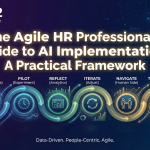
To use AI effectively in HR, avoid large, multi-year software projects that often face resistance. Instead, switch to an Agile HR model.
Successful AI adoption requires adaptability:
-
Cross-Functional Partnerships: HR cannot do this alone. Agile squads combining HR, IT, and legal ensure that skills intelligence programs are rolled out securely and effectively.
-
Iterative Rollouts: With Agile, you can test AI tools in small steps. Try a new onboarding bot with one team, collect feedback, improve it, and then expand. For more details, see our guide on Implementing Agile HR Practices.
-
Building AI Literacy: Invest in training programs to improve your HR team’s understanding of AI. This encourages ongoing learning and supports continuous innovation.
(If you are new to this methodology, start with our breakdown of the Agile HR Operating Model or brush up on terminology in our Agile HR Glossary).
Frequently Asked Questions (FAQs) About AI in HR
As organizations undergo these major changes, HR leaders have many questions.
How is AI used in HR?
AI is used to augment almost every stage of the employee lifecycle. In talent acquisition, it powers intelligent, skills-based matching and conversational chatbots for candidate screening. In employee experience, self-service AI agents handle routine policy questions and IT requests. For talent management, AI drives continuous performance feedback, curates personalized learning pathways, and provides predictive analytics for workforce planning.
What are the benefits and risks of AI in HR?
-
Benefits: AI greatly improves efficiency by automating repetitive tasks, provides valuable workforce insights for better decision-making, and personalizes the employee experience.
-
Risks: The main risks are algorithmic bias (when AI repeats past prejudices in hiring or promotions), data privacy issues involving sensitive employee information, and the loss of the “human touch” if AI is used for complex people matters.
Will AI replace HR professionals?
No. The general view is that AI will not replace HR professionals, but those who use AI will have an advantage over those who do not. AI can automate routine tasks and offer data-driven advice, but it cannot match human empathy, conflict resolution, ethical judgment, or culture-building.
What skills do HR professionals need to survive and thrive with AI?
To stay competitive, HR professionals need strong data skills to understand AI results, an agile mindset to keep up with change, and high emotional intelligence for handling people issues. They also need to learn prompt engineering in HR, which means providing clear, strategic instructions to AI models to yield useful results.
How do HR Professionals Master Prompting?
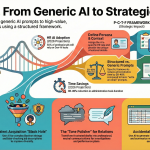
Mastering AI Prompt Engineering: The results you get from AI depend on how well you write your prompts. Learning to create specific, detailed prompts using frameworks like P-C-T-F (Persona, Context, Task, Format) is now a key skill for HR. If you still use basic prompts like “write a job description” in ChatGPT, you are already behind. For more help, check out our library of the 50 Best AI Prompts for HR to improve your workflows.
What is Agentic AI for HR?
Generative AI creates content, such as drafting emails, and Predictive AI forecasts trends. Agentic AI, however, can take actions on its own. It acts like a digital HR teammate. For example, instead of just making an onboarding checklist, an AI agent can send welcome emails, request a laptop from IT, schedule orientation meetings, and follow up with the hiring manager, all without a person having to do each step.
How do we protect employee data and privacy when using AI?
To protect employee data, you need strong governance and teamwork with IT and Legal. HR must ensure any AI vendor complies with local data protection laws, such as GDPR or CCPA. Organizations should use strict data anonymization, run regular security checks, and clearly tell employees what data AI systems collect and how it is used.
Where should I start if I want to implement AI in my HR department?
The best way to begin is to start small with Agile methods. Rather than launching a big, multi-year software project, pick one problem, like too many HR policy questions or slow candidate screening. Test a simple AI tool to fix it, get user feedback, improve the process, and then expand. If you are unsure how to do this, consider getting your team Agile HR Certification as a first step.
The Future is Agile and AI-Enabled
Looking ahead, it is clear that AI will become a regular part of HR. There will be more focus on personalizing employee development, supporting inclusion, and quickly closing skill gaps.
However, technology is only part of the solution. HR professionals who succeed will be those who combine new technology with a focus on people and agility.
Are you ready to lead this change in your organization? The best way to prove your skills and build an AI-ready HR team is to standardize your knowledge. Check out our ICAgile Agility in HR (ICP-AHR) Certification Training to learn how to prepare your workforce for the future. If you are in Europe, we offer time-zone-friendly training options through our Best Agility in HR Training in UK and Europe.

Sagar is an HR Agile Coach & Business Agility Consultant with 17+ years of experience in HR functions at small and large multinational corporations. He has been running an HR consulting firm for the last few years, focusing on leveraging agile methods to increase business efficiency. He works with HR, business leaders, and teams to turn ideas (intentions) into impact (i2i) by improving people practices through AI, analytics, and agile thinking (3As).
Sagar is an authorized instructor for ICAgile Agility in HR (ICP-AHR) and Business Agility Foundations (ICP – BAF) training courses. He has considerable experience in coaching and training on applying agile practices for his clients, primarily HR departments. He also provides consulting for HR for Agile and Agile for HR transformation to corporates.