Courses
 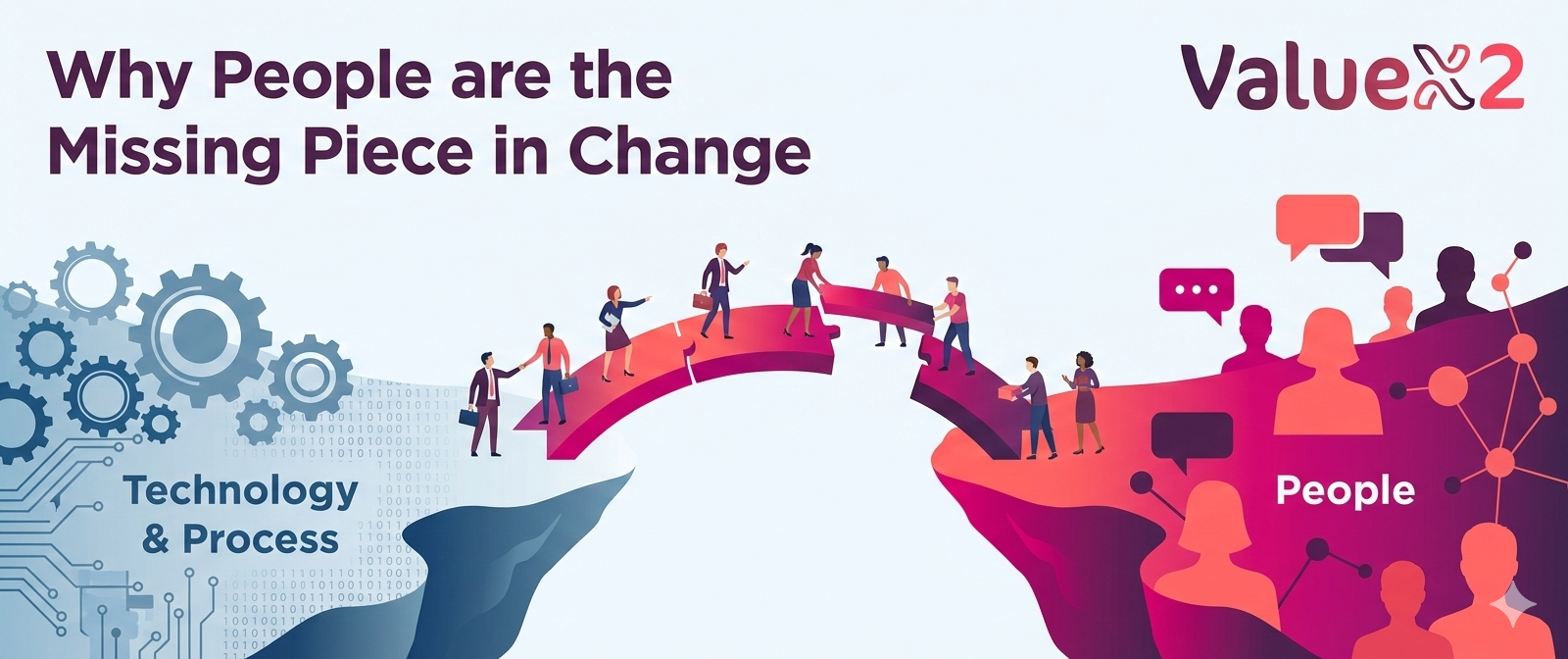 The most important aspect most change programs miss is not the Gantt chart, the technology, or the governance model. It is the lived experience of the people who have to work differently on Monday morning – and HR is too often brought in late, as a support function, not as a strategic co‑owner.
Long Story – Short
Most large transformations – digital, agile, restructures – are still run like technology projects with a communications plan bolted on. Employees experience this as something “done to them,” not “built with them,” which fuels resistance, cynicism, and quiet quitting rather than commitment. This isn’t just anecdotal; research consistently shows that ignoring the human element is a primary driver of failure. Leading analysis from BCG indicates that focusing on the people and cultural dimensions can significantly flip the odds of transformation success.
HR should be the natural steward of this people dimension, yet in many organisations People Operations is invited in when the solution is largely decided: policies are drafted, org charts are drawn, systems are selected. At that point, HR is asked to “roll it out” and “manage the impact,” instead of shaping the transformation from the very beginning.
Lean‑agile ways of working offer a different path: bring HR in early as a partner, involve employees as co‑creators of change, and treat change as a series of small, testable steps rather than a one‑off event.
What employees say during transformation (but leaders rarely hear)
Across digital programmes, agile roll‑outs and restructures, employees tend to raise the same themes:
- “Nobody asked how this will affect my day‑to‑day work.”
- “Decisions feel opaque; we just get told the outcome.”
- “We are already overloaded, and this is ‘on top of’ everything else.”
- “Leaders say ‘people first’ but the project plan says ‘go live at all costs’.”
- “HR shows up when layoffs, job changes or performance pressure arrive – never at the design stage.”
These comments highlight a gap: the human experience is treated as a risk or a comms problem, not as core design input. That is precisely where HR could and should play a very different role.
To unpack this, it helps to look at the issues through classic HR lenses: talent, learning, performance, employee experience, and HR operations.
Talent & workforce planning: change done “to” people, not “with” people
What usually goes wrong
In transformations, talent decisions are often made in small strategy or project rooms, then “communicated”:
- Role changes and restructures are defined without real data on skills, work patterns, or team dynamics.
- Workforce plans are built around headcount and cost, not around critical roles and capabilities.
- Internal talent mobility is an afterthought; it is often easier to hire externally than to redeploy.
Employees experience this as instability and lack of fairness: jobs disappear, reporting lines change, and people discover their future in a slide deck. HR is asked to manage the fallout – updated contracts, redundancy processes, redeployment lists – rather than having influenced the design of the future organisation.
How lean‑agile can help
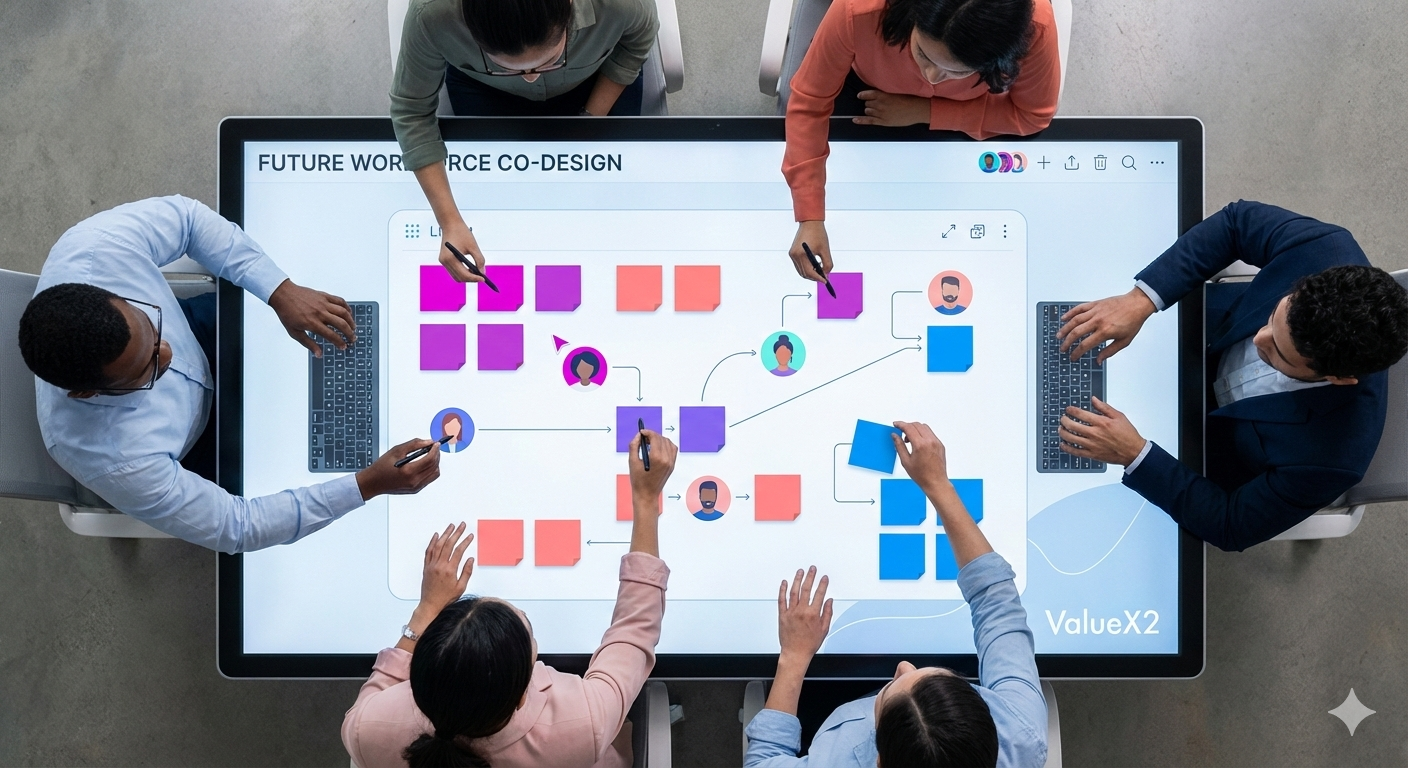 An agile People Operations team treats workforce change as an iterative design problem, not a one‑off announcement.
For example:
- Use short discovery cycles to map real work and skills before redrawing the org chart: interviews, observation, and simple value stream mapping.
- Prototype structure options with small groups, gather feedback on feasibility and risks, and refine before big‑bang announcements.
- Run internal mobility sprints: time‑boxed cycles where managers nominate roles, HR curates internal candidates, and people can explore moves with psychological safety.
This approach does not remove tough decisions, but it does make them more grounded, transparent, and humane – and HR becomes a co‑designer of the future workforce, not just the executor of HR processes.
Learning & development: training as a tick‑box, not a support system
What usually goes wrong
In many programmes, “change management” equals a town hall plus a mandatory e‑learning module. The pattern is familiar:
- People are told to “adopt the new system” without time to learn or adapt their workflows.
- Training is generic, tool‑centric, and disconnected from the reality of the team’s workload.
- There is little follow‑up: no coaching, no reinforcement, no safe space to practise new behaviours.
The result is surface compliance: people click through training, then cling to legacy tools and workarounds because that is what lets them survive the day.
How lean‑agile can help
Lean‑agile HR treats capability building as a continuous, outcome‑focused journey:
- Start with the behaviour change needed (e.g., product thinking in managers, data‑driven decisions in HRBPs), then design “learning sprints” of 2–4 weeks focused on real work.
- Integrate practice into live projects: retrospectives, pair‑working, peer coaching, and just‑in‑time clinics.
- Gather feedback quickly – what helped, what was confusing, where people got stuck – and adjust the learning approach every sprint.
This shifts HR from scheduling one‑off training to stewarding learning loops: short, targeted interventions followed by reflection and adjustment.
Performance & rewards: old systems in a new world
What usually goes wrong
Digital and agile transformations often ask people to collaborate more, experiment, and take ownership. But performance and reward systems are often stuck in the past, failing to reflect how work changed in 2025 and beyond. They still:
- Emphasise individual targets and narrow KPIs that don’t match new ways of working.
- Reward short‑term delivery over learning, experimentation, and knowledge‑sharing.
- Conduct annual reviews while the work changes quarterly or faster.
Employees see the contradiction: “You want me to work in an agile, cross‑functional way, but my bonus and rating still depend on my siloed metrics.”
HR is usually invited to “align performance” after the new operating model has been designed, which turns into a painful retrofit.
How lean‑agile can help
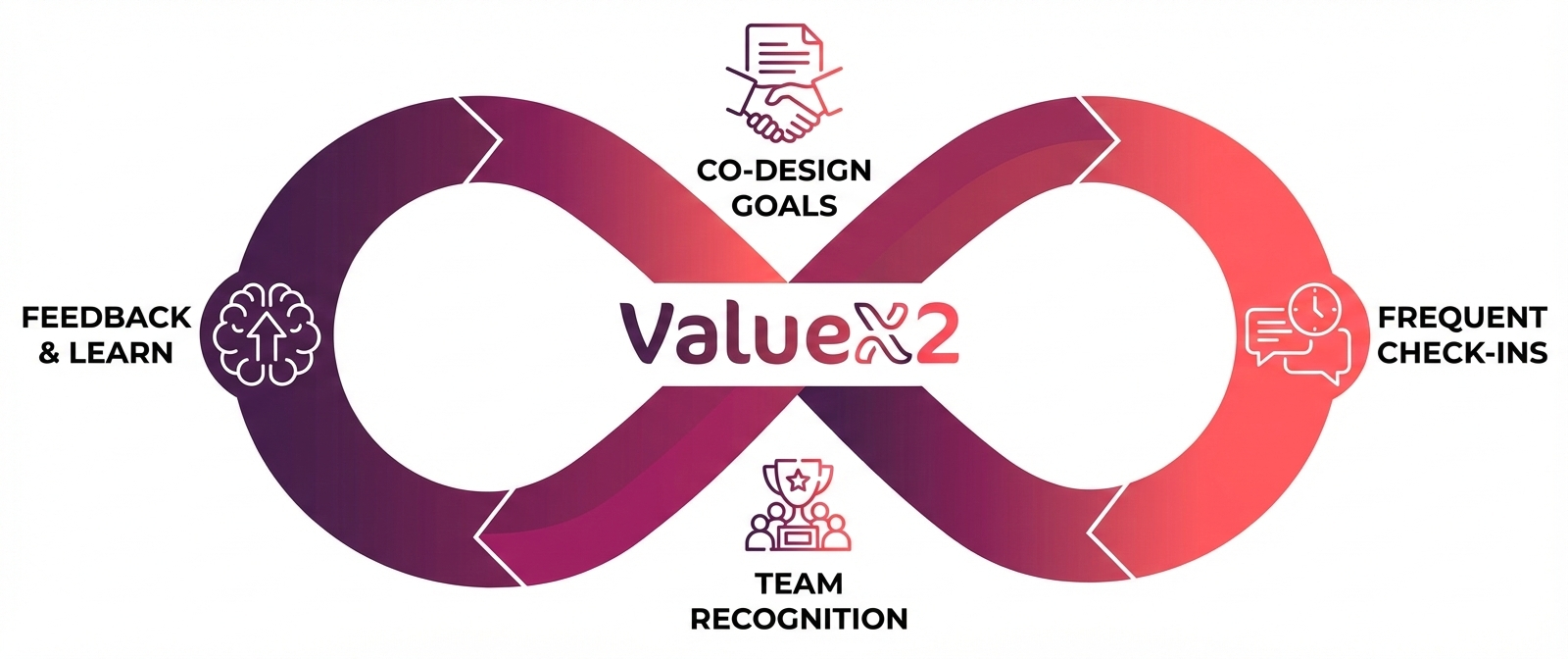 Agile HR starts by asking: what kind of performance system will genuinely support this new way of working?
Practical steps include:
- Co‑designing new goals and measures with teams as they form new squads or product lines.
- Moving towards more frequent, lightweight check‑ins instead of annual, high‑stakes reviews.
- Recognising team outcomes, learning, and contribution to shared goals, not just individual heroics.
Rather than running a huge performance project, HR can pilot new practices with a few teams, inspect outcomes (engagement, clarity, fairness), and iterate before scaling. This aligns incentives with the behaviours transformation actually needs.
Employee experience & wellbeing: overload and “change fatigue”
What usually goes wrong
People rarely resist change in principle; they resist being overwhelmed, unheard, or treated as interchangeable. In big programmes, employees often describe:
- Constant reprioritisation with no clear narrative of “what really matters now.”
- Project timelines ignoring capacity, leading to evenings, weekends, and burnout.
- Leaders talking about wellbeing while pushing aggressive deadlines and parallel initiatives.
HR is frequently tasked with “running engagement” – surveys, pulse checks, wellbeing campaigns – without the authority to influence the actual pace or sequencing of change.
How lean‑agile can help
An agile approach to change makes employee experience a design constraint, not an afterthought:
- Use short, regular feedback loops (surveys, focus groups, office hours) to listen to how change is landing in different populations.
- Treat “change load” as a visible metric; HR can work with the portfolio or PMO function to stagger initiatives and create “recovery space.”
- Build team‑level practices like retrospectives and working agreements so teams can locally adjust meeting patterns, collaboration norms, and focus time.
Here, HR plays the role of coach and integrator: bringing people data into change decisions, challenging overload, and helping teams find sustainable ways of working.
HR operations & systems: tech first, people later
What usually goes wrong
Paradoxically, even HR’s own transformations repeat the same mistake:
- HR tech programmes select systems based on features and price, with limited input from real end‑users (HR teams and employees).
- Processes are automated “as is,” even if they are fragmented, bureaucratic or duplicative.
- HR teams are overwhelmed maintaining compliance, documentation and manual workarounds, leaving little capacity to be strategic.
The message employees get: “The new system is supposed to make things easier, but I now do more clicks, more forms, and still wait for answers.”
How lean‑agile can help
Lean‑agile HR operations focus on simplifying before digitising:
- Map the current process with the people who live it; remove unnecessary steps and handoffs first.
- Use small releases with real users – HR, managers, employees – to test and refine workflows, language, and UI before full roll‑out.
- Keep a visible backlog of HR pain points and continuously improve the experience rather than treating the HRIS go‑live as the finish line.
This mindset turns HR technology from a source of frustration into a platform for ongoing improvement, with HR owning the value, not just the implementation.
Why HR is still not at the transformation table (and what needs to change)
Even with all this, many organisations do not involve HR early, for a few reasons:
- HR is perceived as transactional and compliance‑driven, not as a design partner for the future organisation.
- HR professionals themselves may feel less confident in data, technology, and agile methods, so they avoid the early strategy conversations.
- Transformation governance is often run from IT or Finance, with HR asked to “support” rather than “co‑lead.”
Changing this requires a shift in both perception and capability.
An HR function working in a lean‑agile way:
- Brings evidence: real data about skills, engagement, attrition, and capacity that informs design choices.
- Speaks the language of value and outcomes, not only policies and processes.
- Works iteratively: proposing experiments, learning from them, and adjusting quickly.
When HR shows up like this, it becomes much harder to sideline them in transformation – and much easier to make “people” the starting point, not the afterthought.
Closing perspective: putting people (and HR) back at the centre
 If there is one repeated lesson from failed digital and agile programmes, it is this: technology, structures and frameworks only stick when the people affected are involved early, heard often, and supported practically.
People Operations could be the natural home for that work, but only if HR is invited – and prepared – to step into a different role: from implementer of decisions to co‑designer of change; from policy guardian to facilitator of learning and adaptation.
Lean‑agile ways of working give HR a practical toolkit to do exactly that. The real work now is cultural: giving HR a seat at the transformation table from day one, and recognising that the “soft stuff” – trust, clarity, fairness, sustainable pace – is the hardest, and most decisive, part of any change.

Bhavna is an Agile Coach and Consultant with 15+ years of experience in advisory, corporate finance, IT assurance, and operations at Big 4 and within the industry in the UK and India. She has recently been the CEO of a start-up where she implemented agile practices within HR, Marketing, and Product teams.
She is also a SAFe® Practice Consultant (SPC) and authorized instructor for ICAgile Agility in HR (ICP-AHR), Agility in Marketing (ICP-MKG), and Business Agility Foundations (ICP – BAF) training courses. She provides training for agile transformation to corporate, public, and private batches, as well as consulting for enterprise agile transformation.